

What Is Bounce in a Golf Wedge?
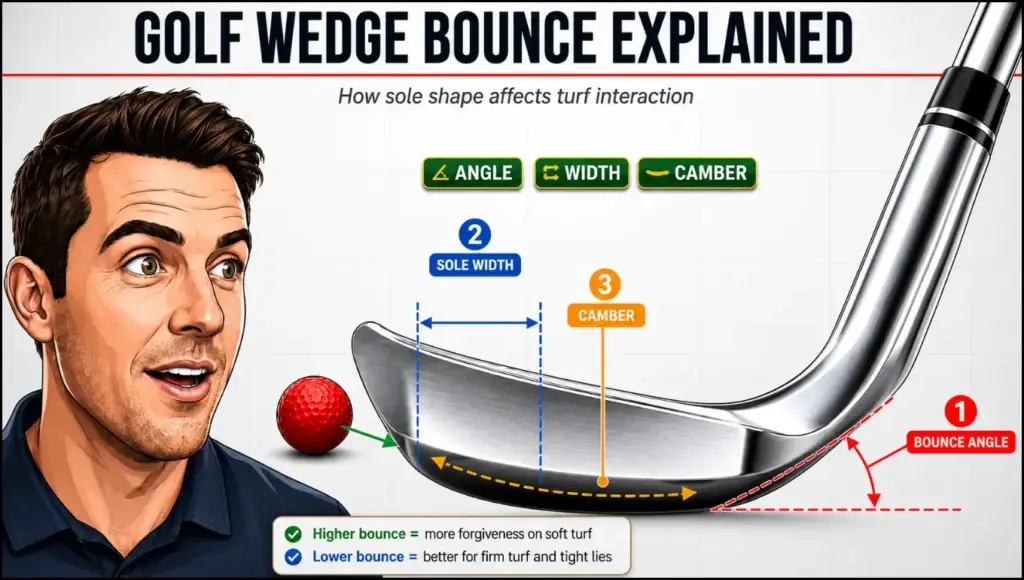
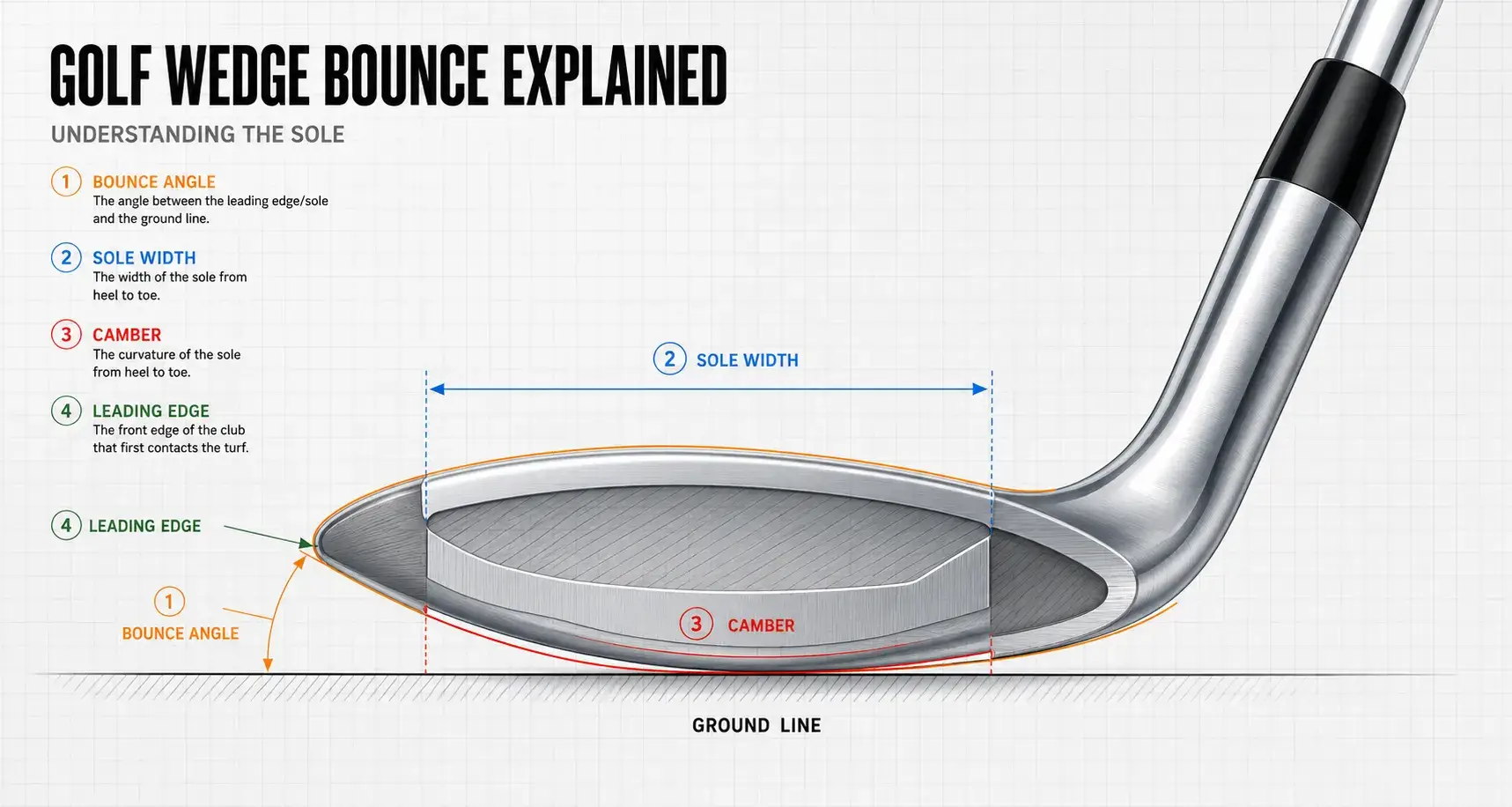
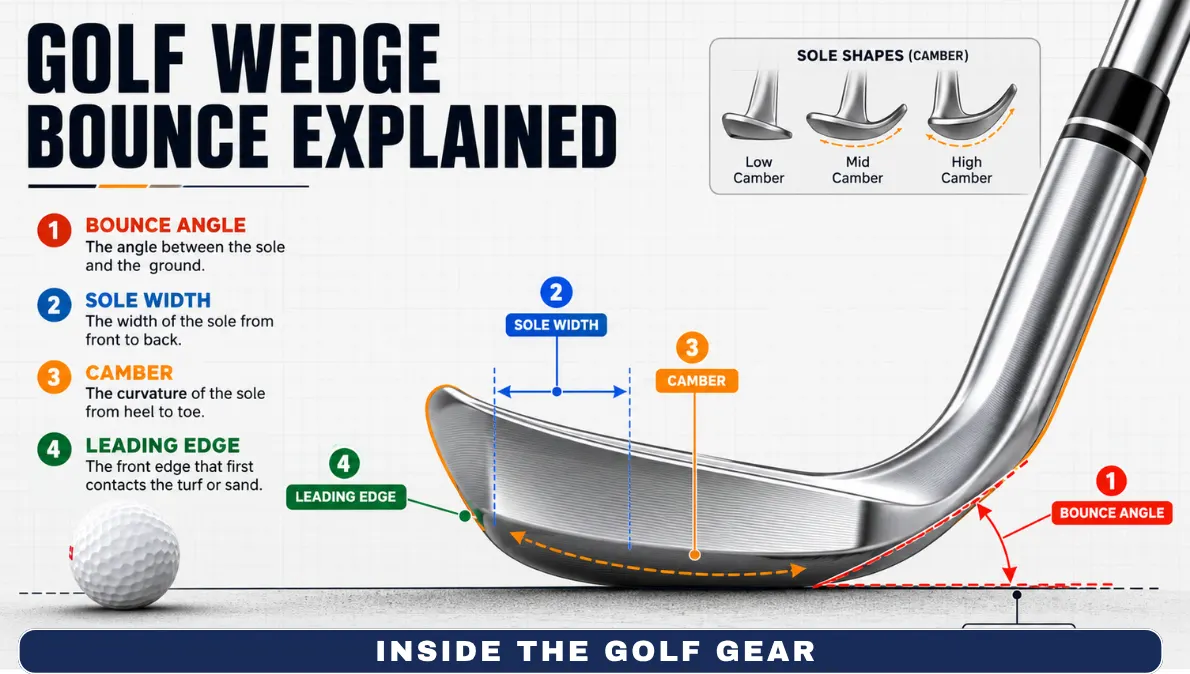
Golf Wedge Bounce Explained
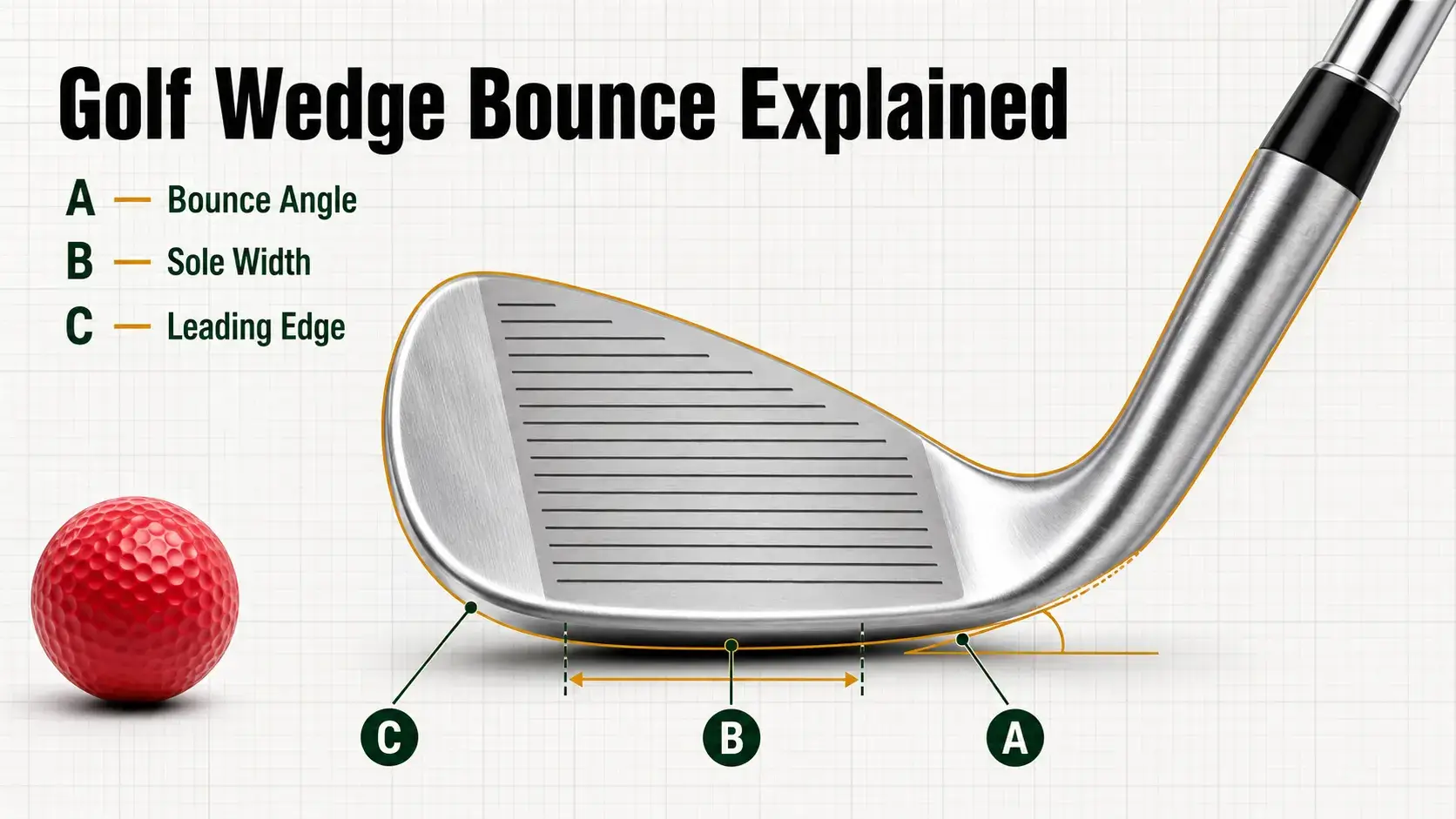
Wedge bounce is the angle that helps the sole of the club glide through turf or sand instead of digging into the ground. More simply, it is the built-in “skid” on the bottom of the wedge.
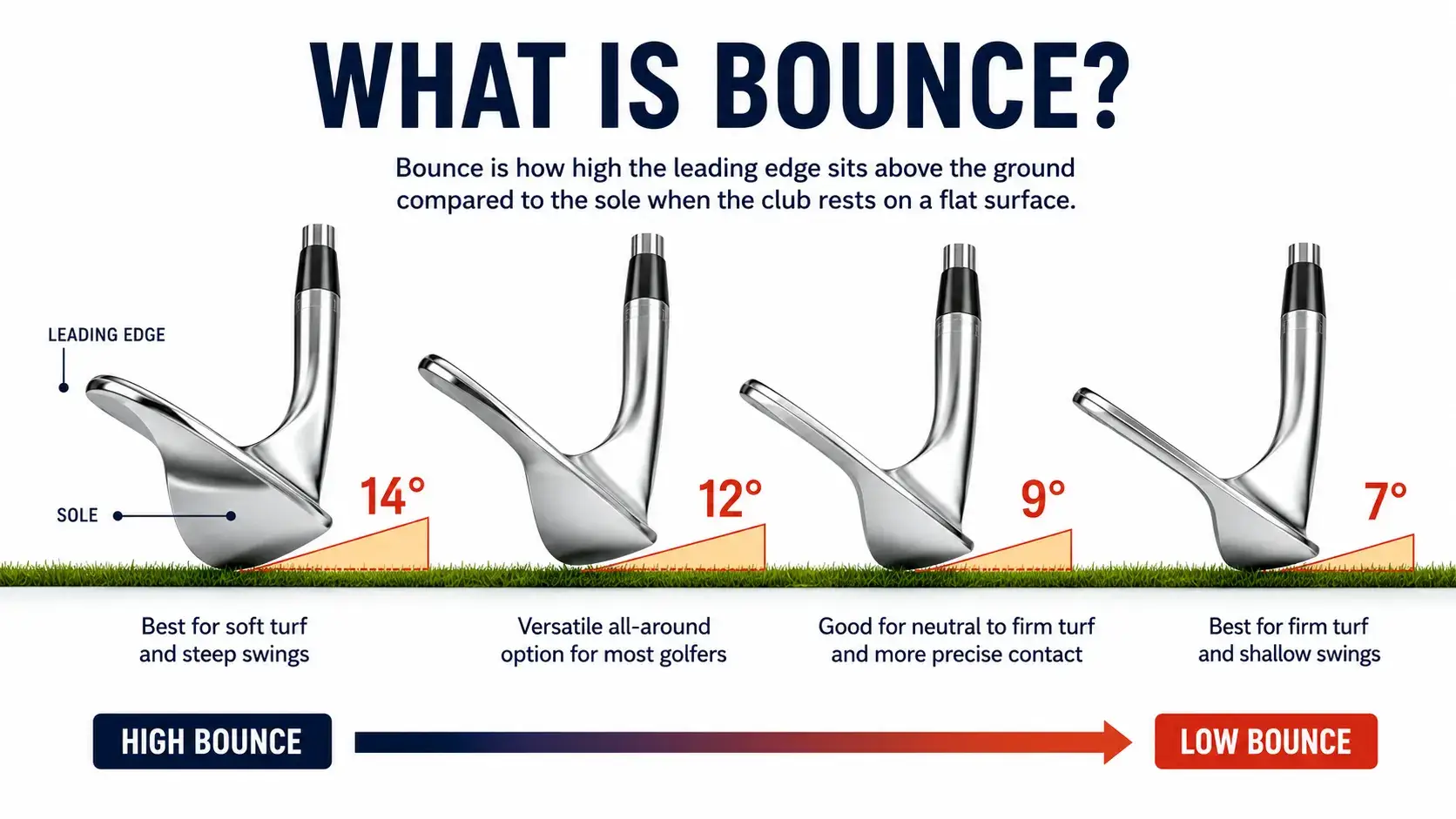
When you see a wedge marked 56.12, the first number is the loft and the second number is the bounce. So, a 56.12 wedge has 56 degrees of loft and 12 degrees of bounce.
Bounce matters because wedge shots happen close to the ground. If the leading edge digs too much, you hit the shot fat. If the sole bounces too much off firm turf, you may blade it across the green. The right bounce helps the club move through the ground more consistently.
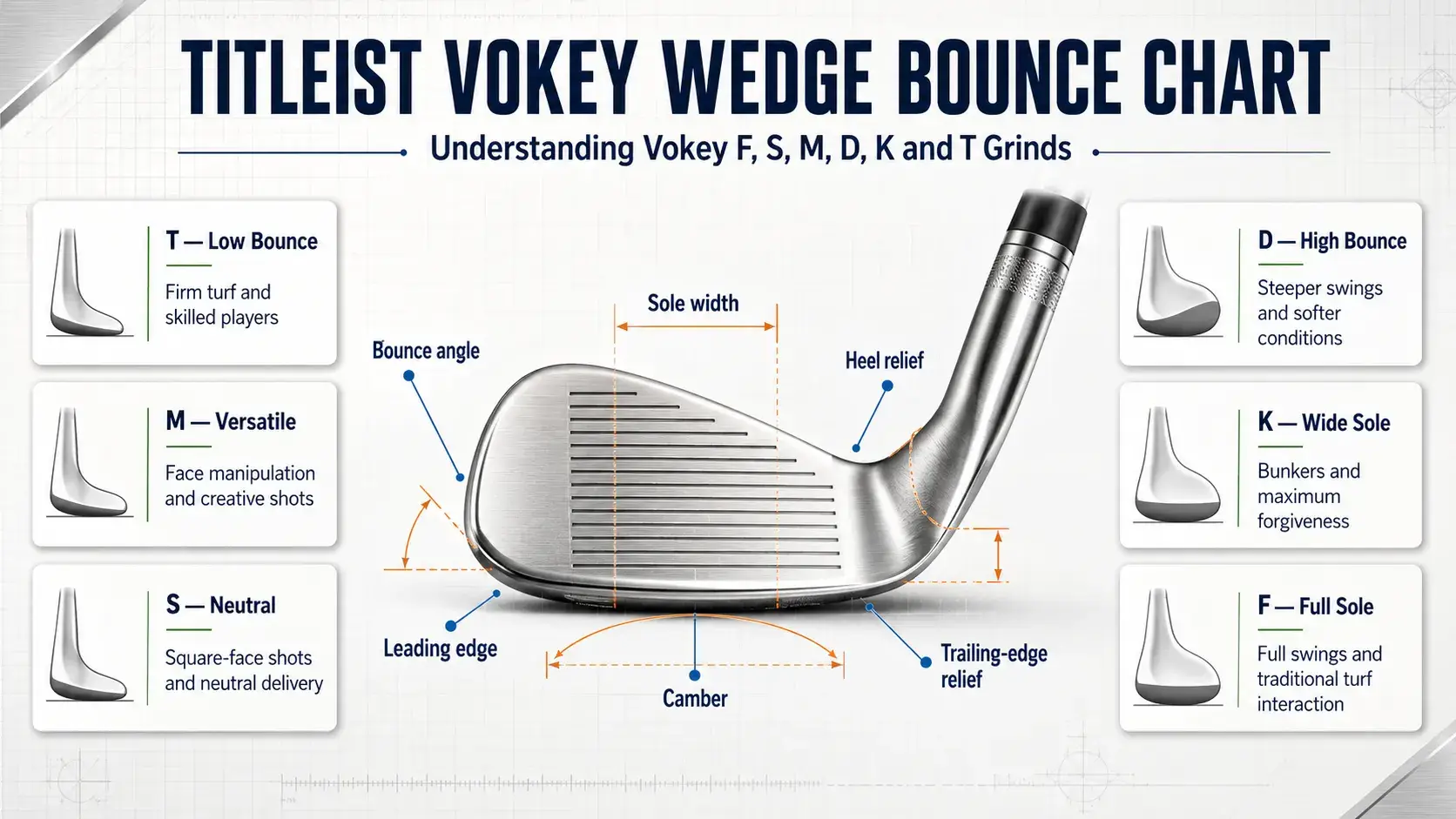
Titleist Vokey explains bounce in a similar way: low bounce tends to dig or cut into the turf, while higher bounce helps the wedge glide and resist digging, especially in softer conditions.
Low bounce cuts. High bounce glides. Mid bounce does a little of both.
What Bounce Should You Use?
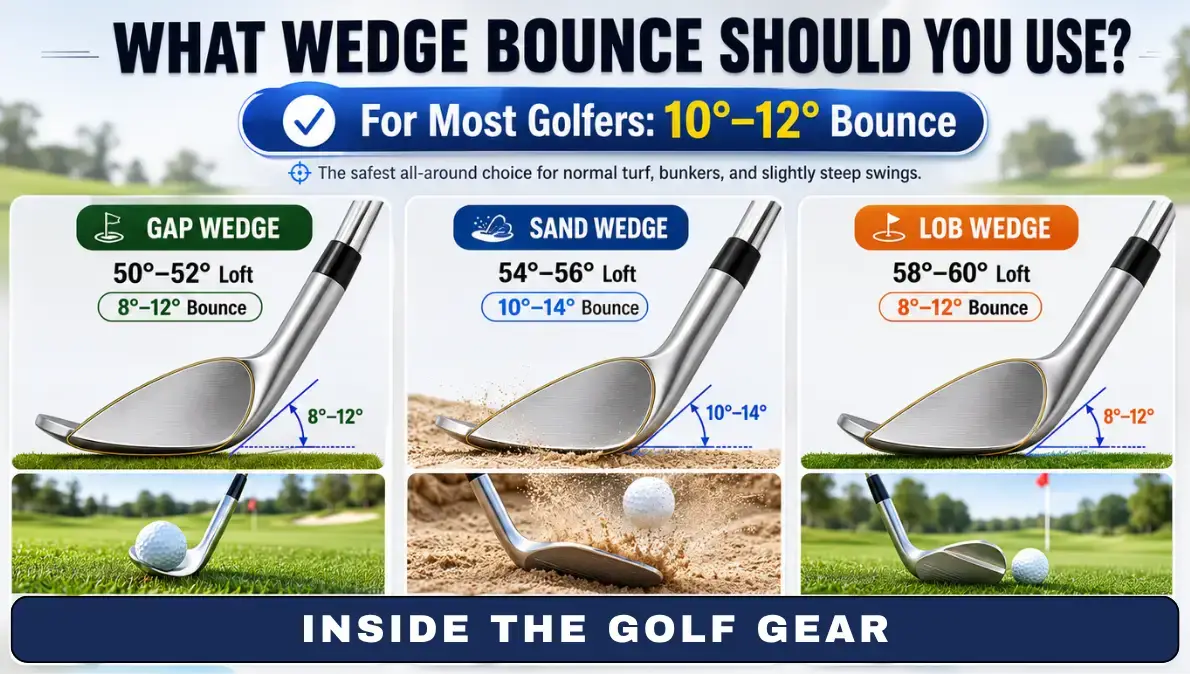
For most golfers, mid-to-high bounce is the safer choice. Around 10-12 degrees handles normal turf, bunker shots, and slightly steep swings without punishing you.
Why Bounce Matters More Than Loft
Golfers obsess over loft. Bounce is what actually saves strokes around the green. Too little bounce: the leading edge digs first, causing chunked shots on soft turf or in sand.
Too much bounce: the sole skids off firm turf before the face reaches the ball, causing thin or bladed shots.
The right bounce means consistent contact. That's the entire game inside 100 yards.
Golf Wedge Bounce Chart
Wedge Bounce for High Handicappers
Wedge Bounce for Beginners
Beginners should prioritize forgiveness over shot-shaping. Most beginners miss wedge shots by hitting the ground too early, so extra bounce helps the sole skid instead of dig.
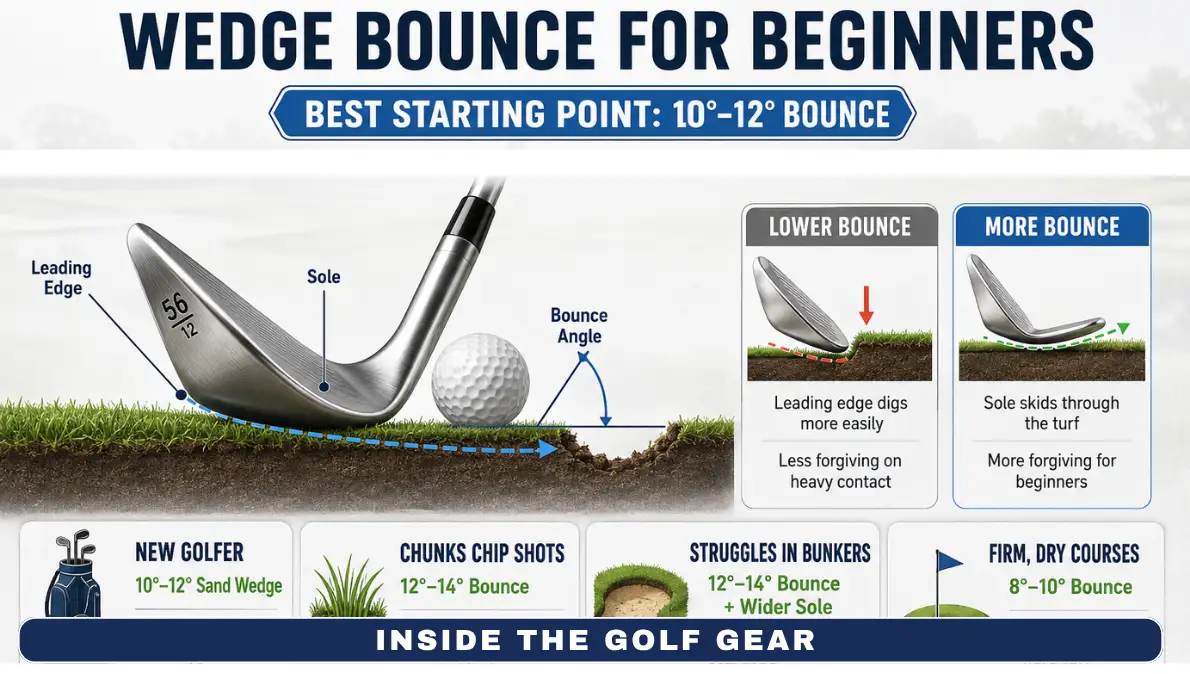
The most common beginner mistake is buying a low-bounce 60-degree lob wedge because it looks like a tour club. Without a consistent strike, it's one of the hardest clubs in the bag to use well.
Best Bounce for a 60 Degree Wedge
The 60-degree wedge is the trickiest club to match with bounce because it's used for so many different shots.
Titleist's current Vokey SM11 lineup offers 60-degree options from 60.04T up to 60.12K, showing how much bounce can vary at the same loft. Most everyday golfers do better around 8-10 degrees. If you're a high handicapper, a 58-degree wedge with 10-12 degrees of bounce is often easier to use than a low-bounce 60.
Bounce vs Grind: What's the Difference?
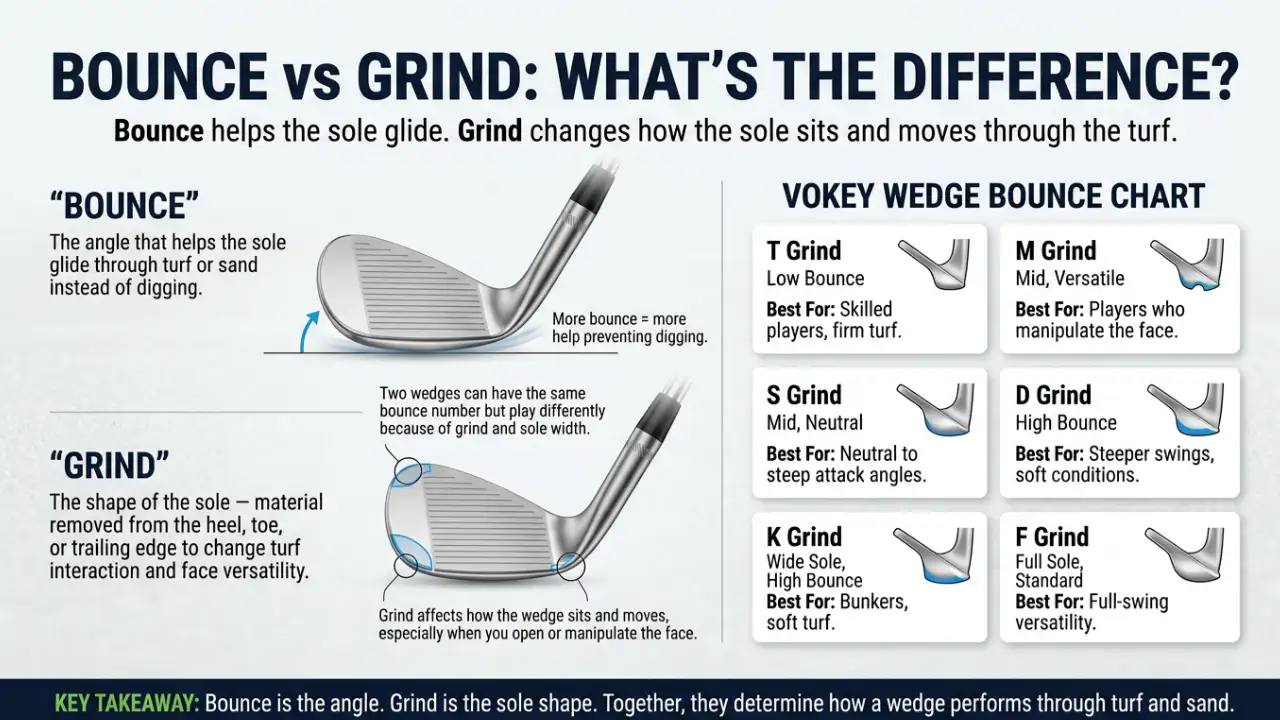
Bounce is the angle that helps the sole glide. Grind is the shape of the sole, material removed from the heel, toe, or trailing edge to change how the wedge sits and moves through turf. Two wedges with identical bounce numbers can play differently depending on grind and sole width. That's why brand charts list a grind letter alongside the bounce number, not just the degree.
Wedge Bounce Charts by Brand
Vokey Wedge Bounce Chart
TaylorMade Wedge Bounce Chart
Cleveland Wedge Bounce Chart
Callaway Wedge Bounce Chart
Mizuno Wedge Bounce Chart
Ping Wedge Bounce Chart
How to Choose Your Wedge Bounce in 3 Steps
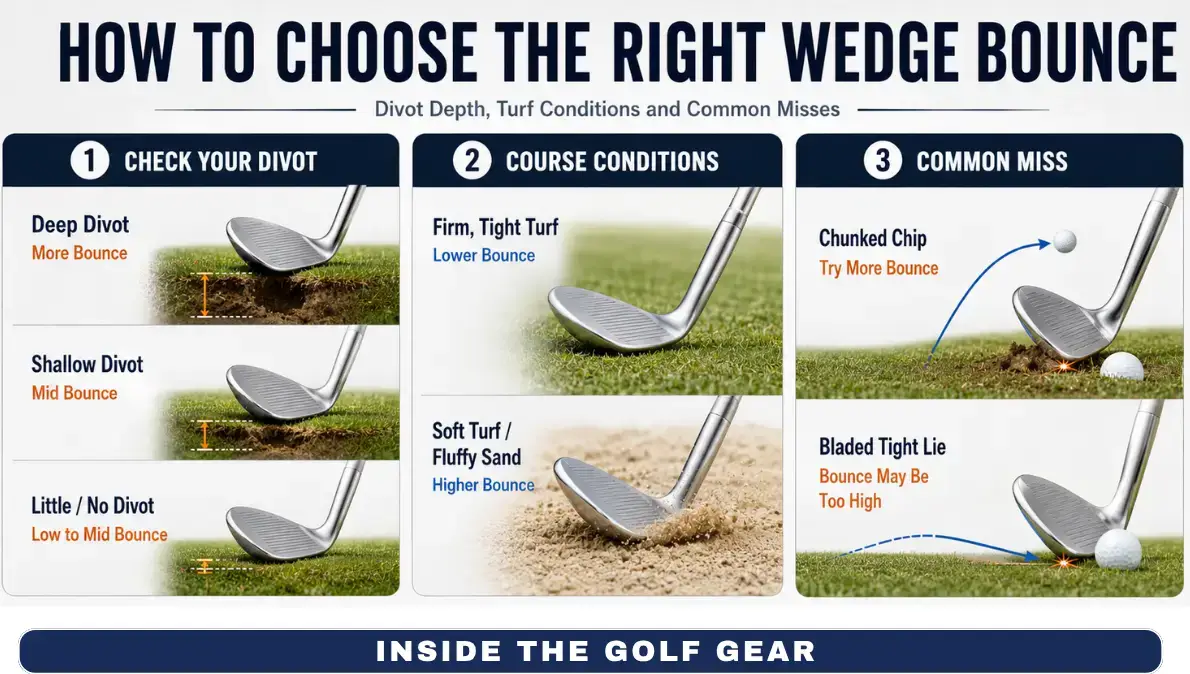
Common Wedge Bounce Mistakes
What Bounce Should You Buy?
A Small Request for Our Readers

Hey amazing reader!
We know the ads can get a bit much sometimes, but they help keep this site alive and bring you the content you love. Your support means the world- thank you from the heart! 💙
We may earn a commission, at no additional cost to you.